

Baccariamo
A guide to experiencing Venice like a local through food & wine

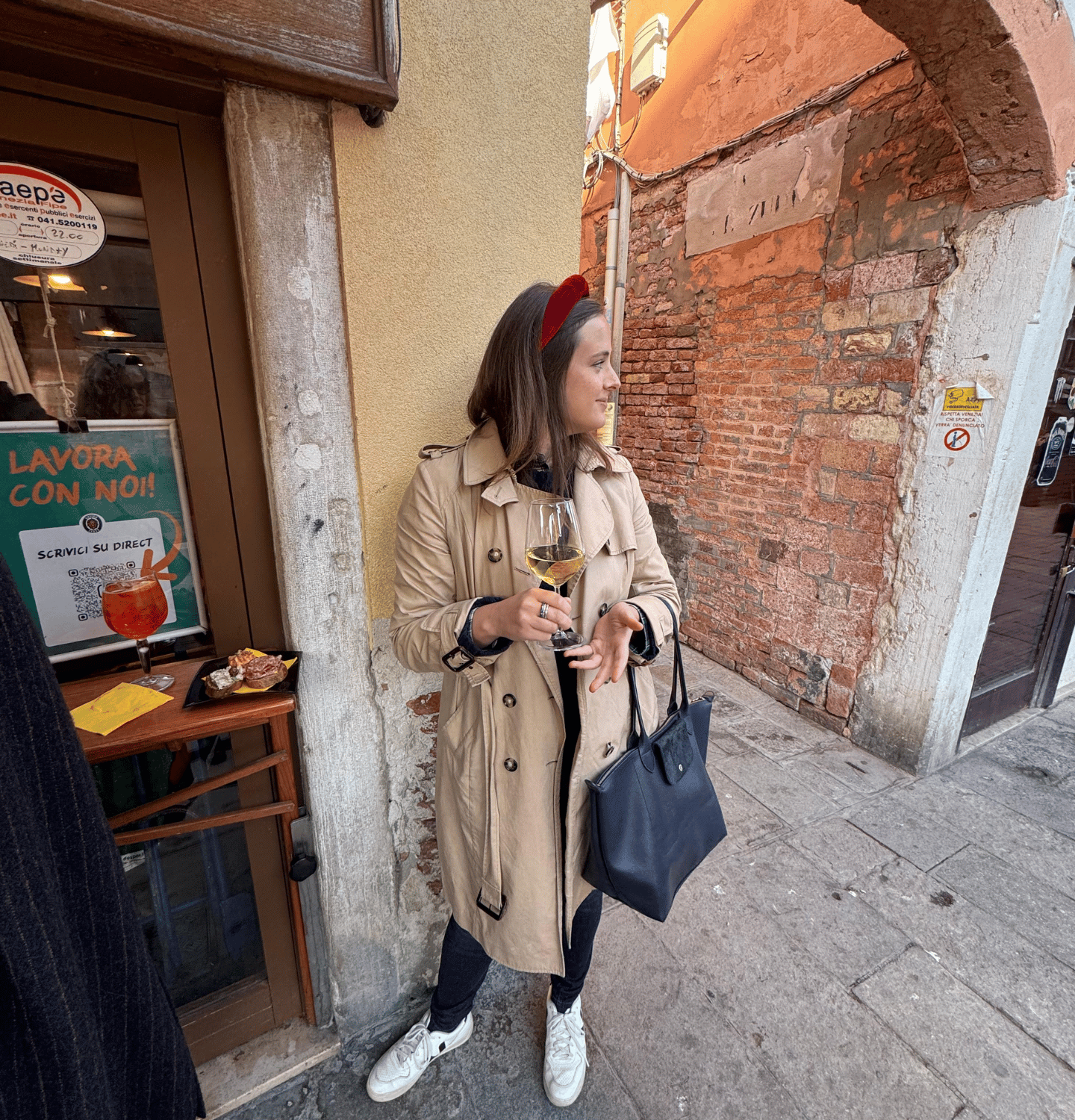
Venice has been on the mind lately. I just finished reading a novel about the female glass beadmakers of Murano by Tracy Chevalier (would recommend), and my Instagram feed has been flooded with news about the opening of the 2026 Biennale.
With La Serenissima on the brain and in the news, now is as good a time as any to introduce one of the most quintessential Venetian pastimes that obviously involves eating and drinking: andare in bacaro.
The bacaro (plural, bacari) is the Venetian version of the enoteca, or wine bar, but its importance goes far beyond its material use: it is a space that reflects the Venetian people, their cultural values, and their “open” lifestyle.
In this post, I will dive into what exactly the ritual of the bacaro is, how it came to be, and how to take part in it. I will also share my ideal bacaro tour (with Google map pins) that you can save for your next trip to Venice.
Unmasking the Bacaro
In a region such as the Veneto, where the tradition of drinking (and eating) is core, it’s essential to preface with an explanation of key words that you will only come across in Venice and relate directly to the bacaro experience:
Bacaro
/ BAH-kah-roh
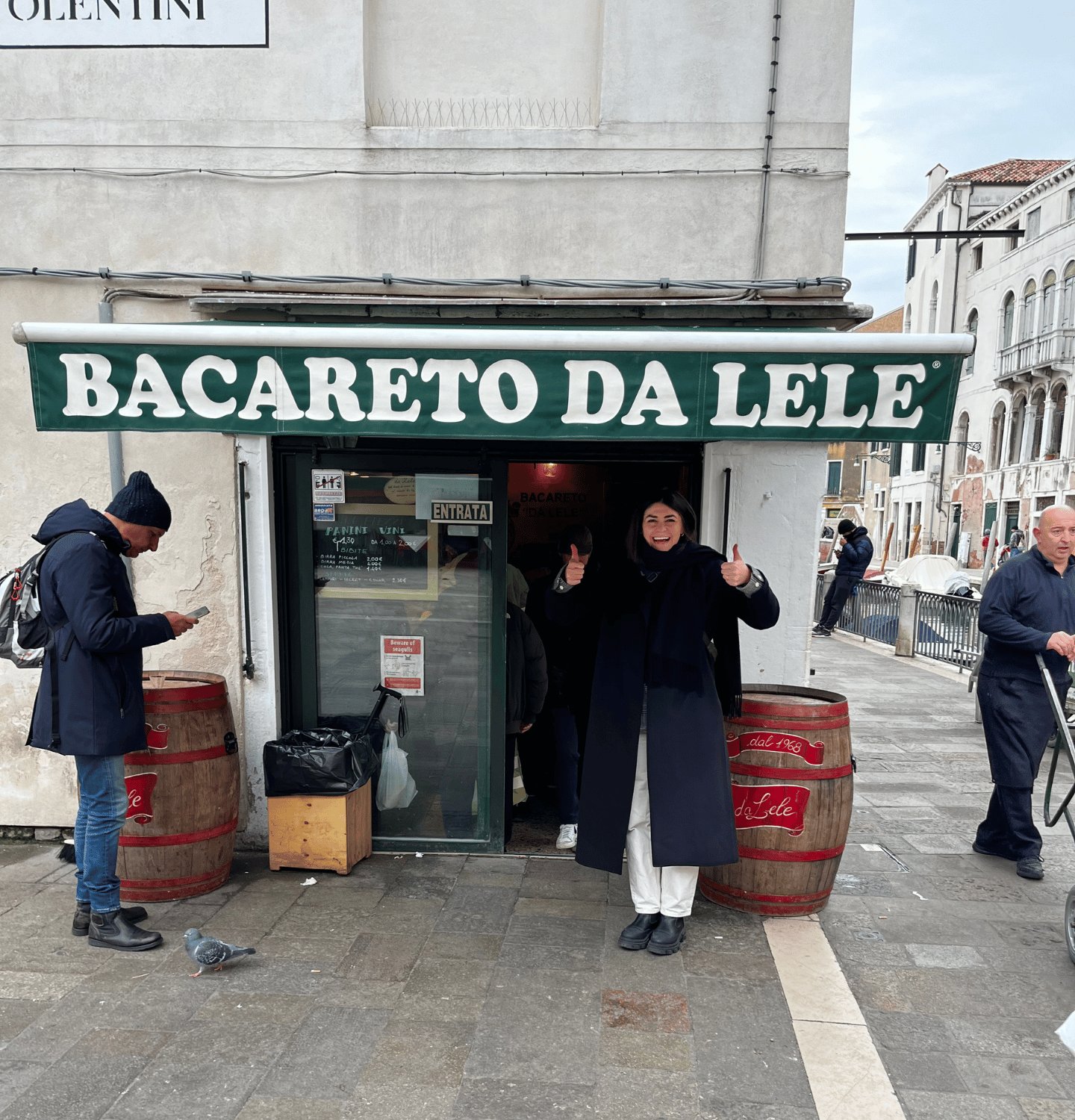
The word “bacaro” stems from the Venetian dialect word bacarare, meaning “to make noise” or “to party.” This definition makes sense, as one of the main activities that takes place inside the bacaro is drinking wine, specifically a glass of ombra. According to historical evidence, the term bacaro is relatively recent. It emerged after Venice joined the Italian state in 1866 and is a modern iteration of other ancient drinking spaces that once existed there: “Malvasia” (named after the wine that was sold there) and “Furatola” were historical precursors of the bacaro, dating back to the 16th century.
Ombra
/ OHM-brah
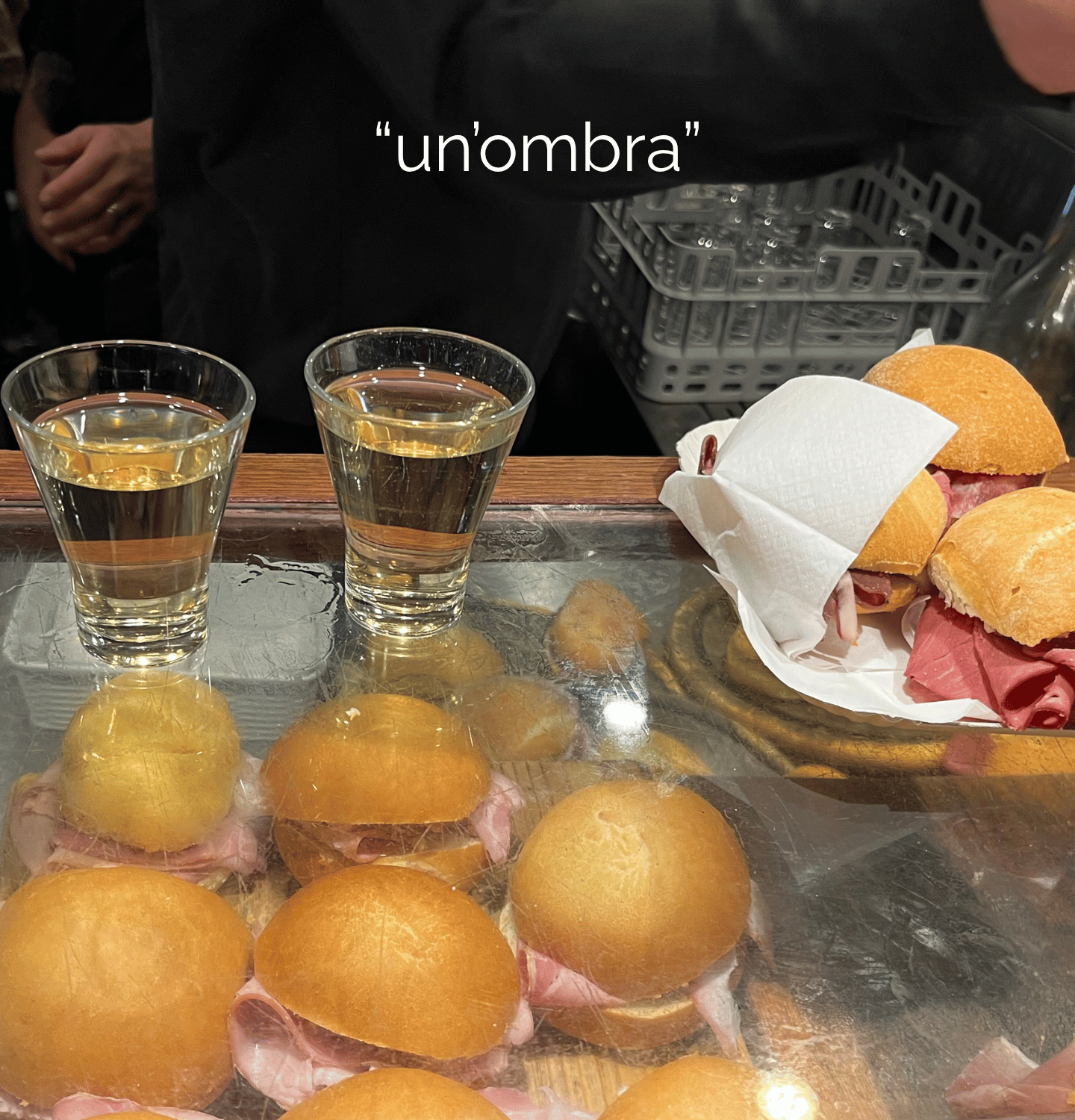
Put the spritz down and order an ombra. Venetian dialect for a small glass of wine, un’ombra is what you order in traditional bacari and is typically the house white or red. If you’re used to American-sized servings, the ombra glass will look comically small, since it is meant to be a cheap and quick way for Venetians to wet their whistle as they go about their day.
In Italian, ombra means “shadow.” How did this term come to replace the word vino (wine) in Venice? The myth goes that wine merchants used to sell their goods at the base of St. Mark’s bell tower, always moving their carts to remain in the shade of the looming structure to keep the wine fresh. Hence, going all’ombra came to be synonymous with grabbing a glass of wine. A more likely, less mythological explanation comes from the alternative definition of ombra, which is “slight” or “scant amount,” a reference to the small amount of wine that is poured.
Traditional bacari often serve ombra without an explanation of what the wine actually is, beyond red or white. Meanwhile, nouveau bacari like Vino Vero and Osteria al Tappo have full-blown wine lists to choose from. Neither is necessarily better; it just depends on what type of experience you are looking for. If you do feel like a spritz, go for the Spritz Select, which is Venice’s take on the apéritif cocktail.
Cicchetti
/ chee-KEHT-tee
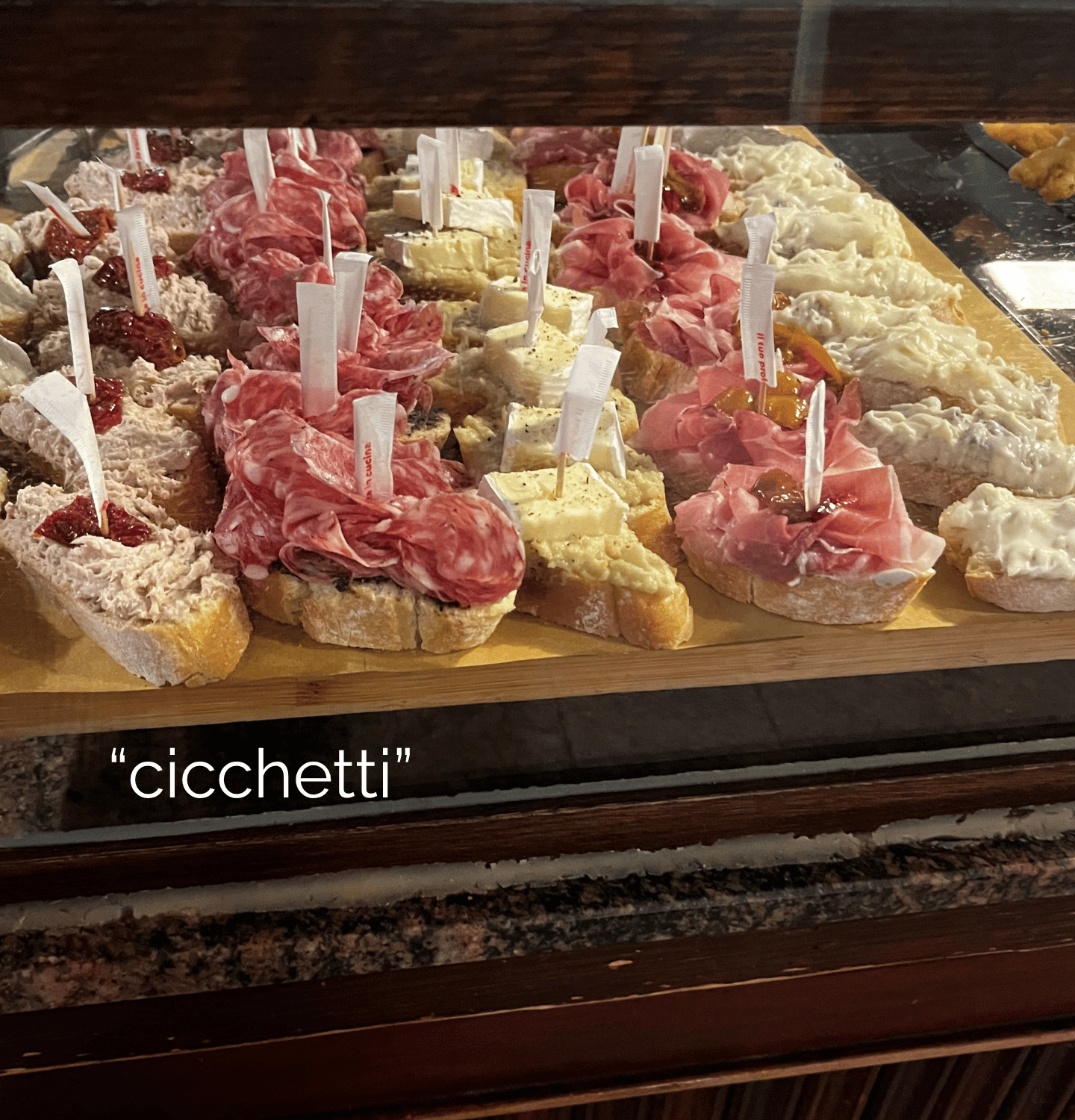
Venetian snacks consumed in tandem with drinking at any point during the day, from nine a.m. to eleven p.m. Usually bite-sized and served on a vehicle of toasted bread, cicchetti range in price from €1.50-€2.50 each and can be mixed and matched. Typical cicchetti you will find in Venice are baccàla mantecato (rehydrated salted cod, beaten into a paste with olive oil), polpette (meatballs made from either vegetables or meat), and uove sode con acciughe (boiled eggs with an anchovy garnish).
Socialità e convivalità
To understand the bacaro from a local’s perspective, I interviewed a real Venetian; there aren’t so many these days due to the high cost of living and the associated inconveniences of living in a tourist hotspot. The interviewee was Davide de Giorgi, a Venetian boat captain who is the self-proclaimed “Bacaro King.” Davide is the captain and owner of the private boat tour company, Veneziamare.
While cruising around the lagoon, Davide explained how the bacaro is intimately related to the Venetian lifestyle and cultural values, particularly socialità, or inclination to associate with others. He described how people’s openness is a direct result of the city’s infrastructure. The winding canals with low-hanging bridges prevent boat owners from having canopies or closed cabins:
Because going around, we don’t go inside the car. We don’t have the air conditioner and the music. We go in small boats. Usually, we never go inside the cabin because when we have high tide, we can’t pass under the bridges, and so the boats are open. When we cross each other by boat, we see each other, ever since we were young.
The open culture that Venetians experience from childhood lends itself to a shared sense of camaraderie. A popular Venetian saying that captures this socially transparent lifestyle: “Belli o brutti, li conosciamo tutti” (“Beautiful or ugly, we know them all”). The frequent interactions lead to the use of nicknames and greetings such as “Vecchio,” “Coco,” or “Maestro,” which Venetians use with each other depending on their level of familiarity.
This aspect of socialità is the driving spirit of the bacaro. The primary reason why people go there is to meet friends and chat over an ombra, while sharing a plate of cicchetti.
When I asked Davide whether the bacaro is part of the Venetian identity, his response was resolute: “It’s not only an identity. Yes, this is what we do. This is who we are. I don’t want to joke because it’s real. This is our life. The bacaro for us today, it’s our real life of Venice.”
“It’s not only an identity…This is who we are. I don’t want to joke because it’s real. This is our life. The bacaro for us today, it’s our real life of Venice.”
Baccariamo
Now, let’s get into the how of the bacaro. How exactly do you take part in this uniquely Venetian ritual? A popular way is to do a guided or self-guided “bacaro tour,” or giro dei bacari, as Italians say. Essentially, it is a bar hop from one bacaro to the next. At each locale, you choose a few cicchetti from the glass display case and order un’ombra to wash it all down. No need to make reservations or stick to the set itinerary. Diversions are inevitable and recommended during the bacaro tour.
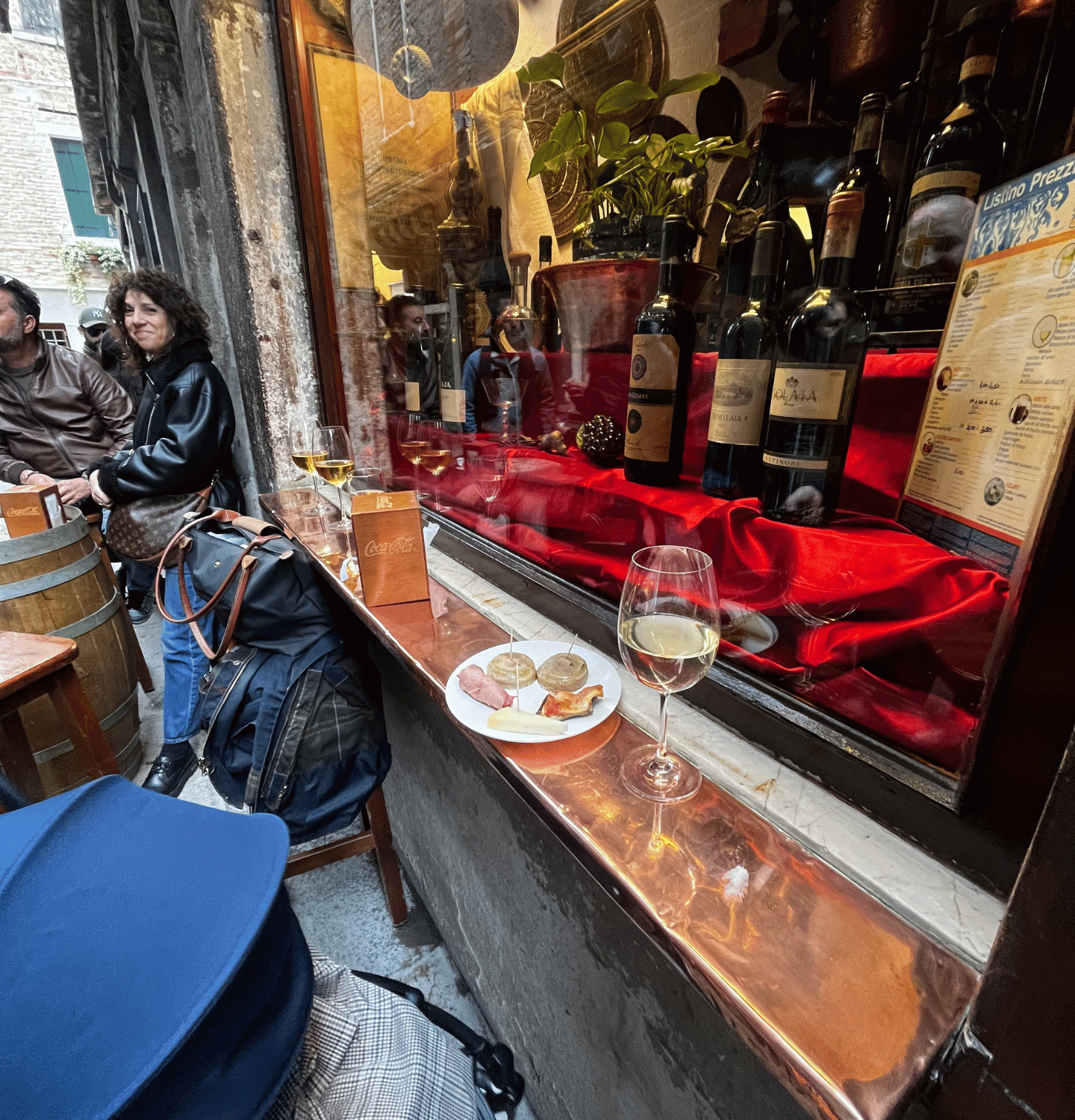
Because bacari are usually small establishments hidden down random alleyways, the bacaro tour becomes almost like a treasure hunt where food and drink are the prize. Bacari rarely have seats and tables, so guests typically stand around a counter to eat and drink or congregate outside. The lack of seating and pint-sized bites and wine pours shape the temporality of the bacaro: the space exists for casual socialization and to be frequented at any point of the day. This aspect separates the bacaro from the tradition of Italian aperitivo, which is bound to a specific time, either before lunch or dinner.
It is important to note that bacaro tours are the invention of tourists, as real Venetians like Davide do not experience the bacaro in this conscriptive way. The bacaro is simply part of their everyday routine. As an outsider, it is also easy to be misled into a “fake” or “inauthentic” bacaro experience if you are not careful.
A “real” taste of Venice
To be sure you are getting the real deal, I put together two bacaro tours, one starting in Cannaregio and the other in the Rialto neighborhood. I am working on a third route that begins at one of my all-time favorite bacari, da Lele, but I have a bit more research to do before sharing.
Since Padova is a short 20-minute train ride to Venice, I personally completed different versions of these tours with friends and family in the past two years, adapting itineraries and recommendations primarily found in Monica Cesarato’s book, Andar per Bacari.
All of the bacaro locations that are La Nonna Vita approved are pinned on this Google map.
Let’s get into the bacaro tours.
Starting in Rialto
This bacaro tour takes place in Venice’s commercial heart. I recommend starting around 10 am, which is when most of the bacari open and before the huge influx of tourists arrives.
From Venezia Santa Lucia, walk 20 minutes to the Rialto area. If you arrive early enough, check out the historic Rialto market, where you can ogle the freshly caught fish from the lagoon and seasonal vegetables grown on Sant’Erasmo island.
Locations: Osteria All’Arco, Cantina Do Mori, Cantina Do Spade, Bar Rialto da Lollo, Al Merca, Vino Vero
Stop 1: Osteria All’Arco
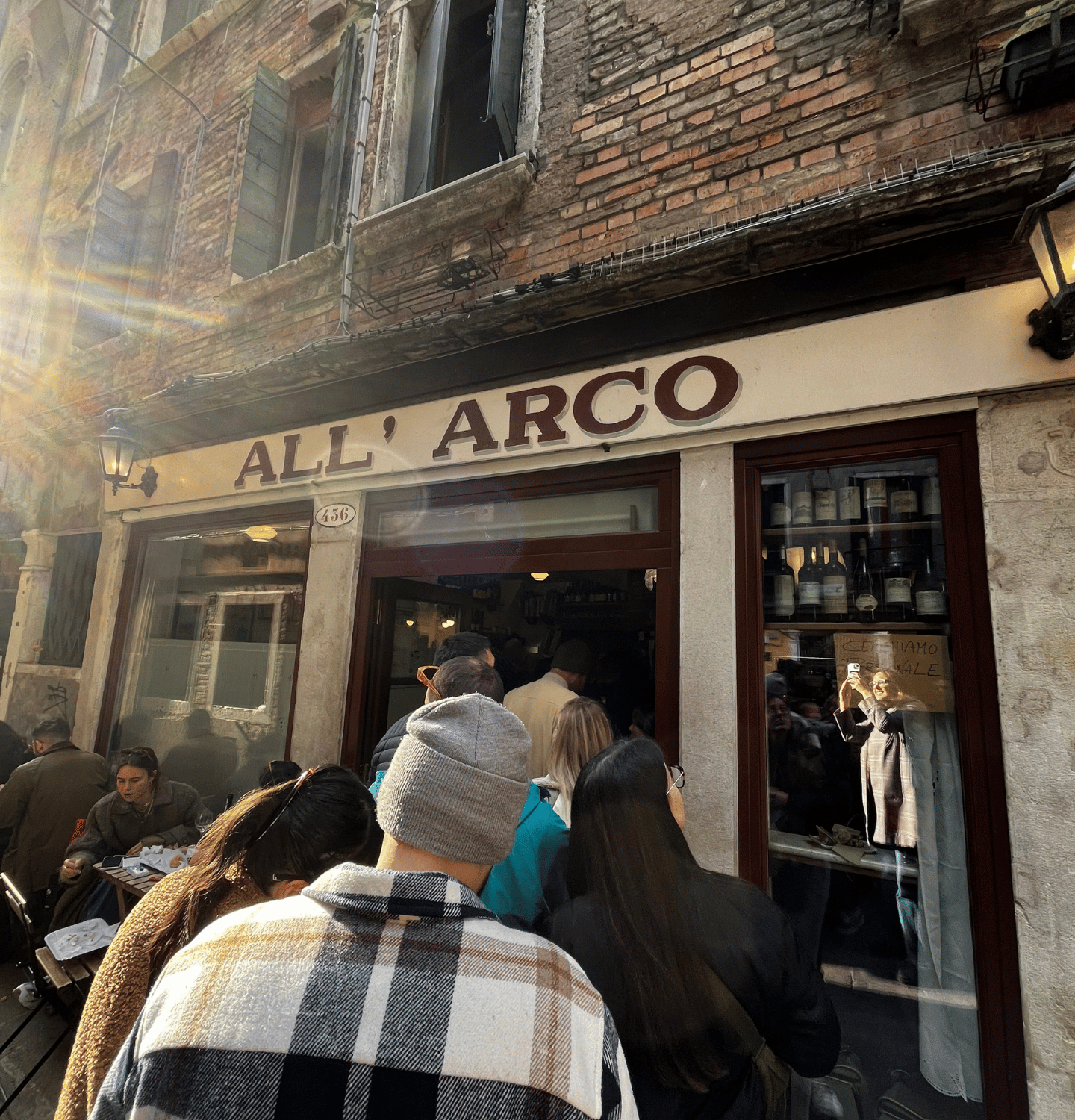
Named after the bricked archway across from the entrance, All’Arco is probably the most famous bacaro in Venice, having been featured on the Season 2 premiere of Stanley Tucci: Searching for Italy (Venice episode). The recognition is for good reason: their cicchetti are made fresh daily and are very tasty, especially their fish and fried plates. I recommend All’Arco to be the first stop before the long queue out the door begins to form.
Stop 2: Cantina Do Mori
Do Mori is one of local Davide’s top picks. Rumored to be Venice’s oldest wine bar dating back to 1462, I can’t say Do Mori has the best cicchetti in the world, but the atmosphere is something to behold. Old copper pots hang from the ceiling, and the bar is lined with traditional damigiane filled with wine for ombra by the glass.
Stop 3: Cantina Do Spade
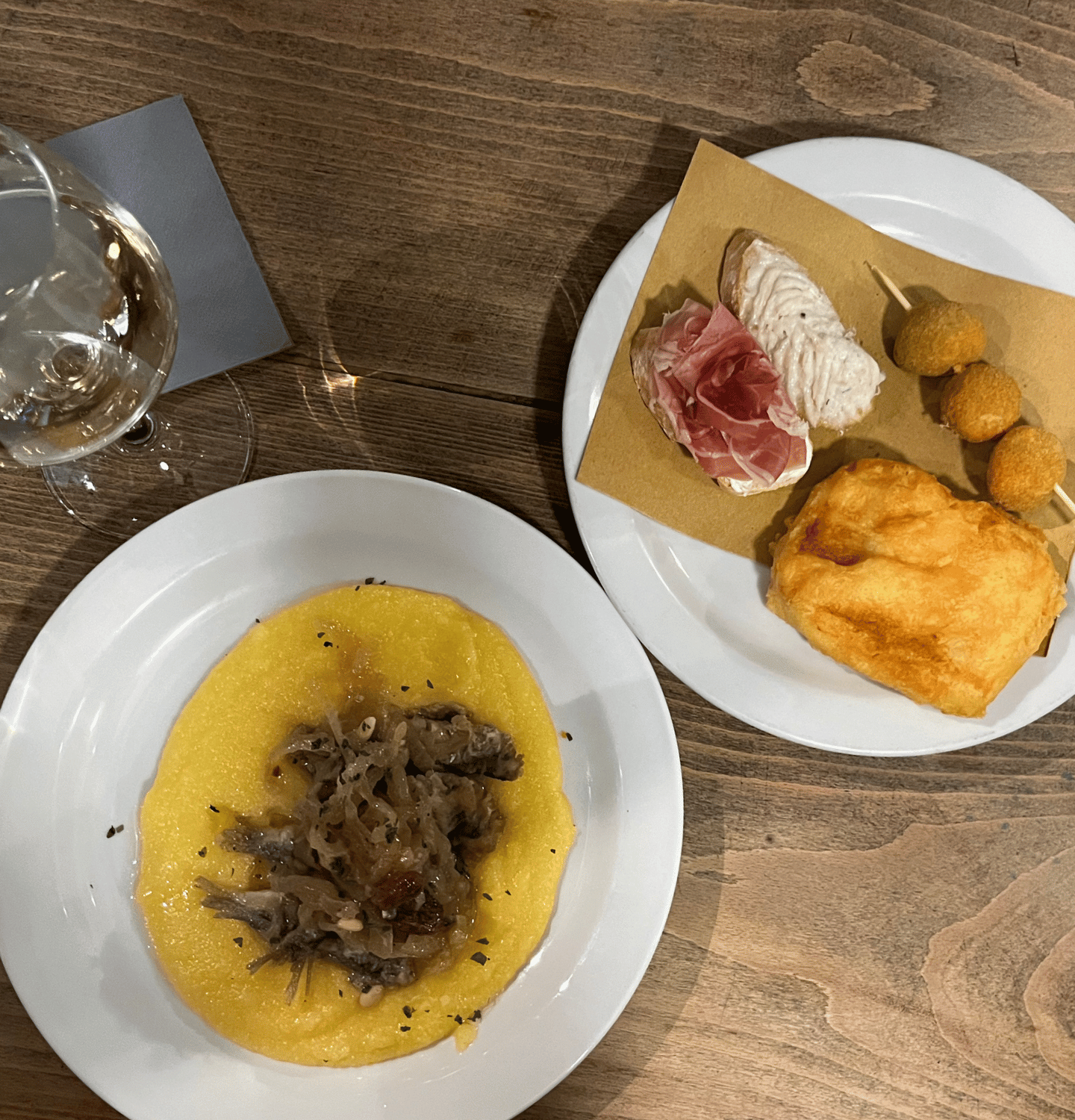
Do Spade is one of those bacari that you may walk past a few times before you spot the entrance. Another historical bacaro, Do Spade offers all the classic cicchetti, including sarde in saor, sardines cooked with onions, vinegar, pine nuts, and raisins over a bed of polenta.
Stop 3: Bar Rialto da Lollo
Not a bacaro, but if you are in the mood to try a tramezzino, this is the place. Here, the tramezzini are made with soft, crustless white bread, stuffed to the breaking point with mayo-ey fillings, and cut into their classic, triangular shape. In my personal opinion, tuna with pickled onions, or tonno con cipolline, is the best flavor, but there are countless others to choose from.
Stop 3: Al Merca
A very cute and very small (re: absolutely no seating) bacaro. What I like about this spot is the wine selection—they have much more on the list than simple ombra—and their €2 bite-sized sandwiches that are filled with things like locally made soppressa; speck and gorgonzola; and tuna, radicchio, and horseradish.
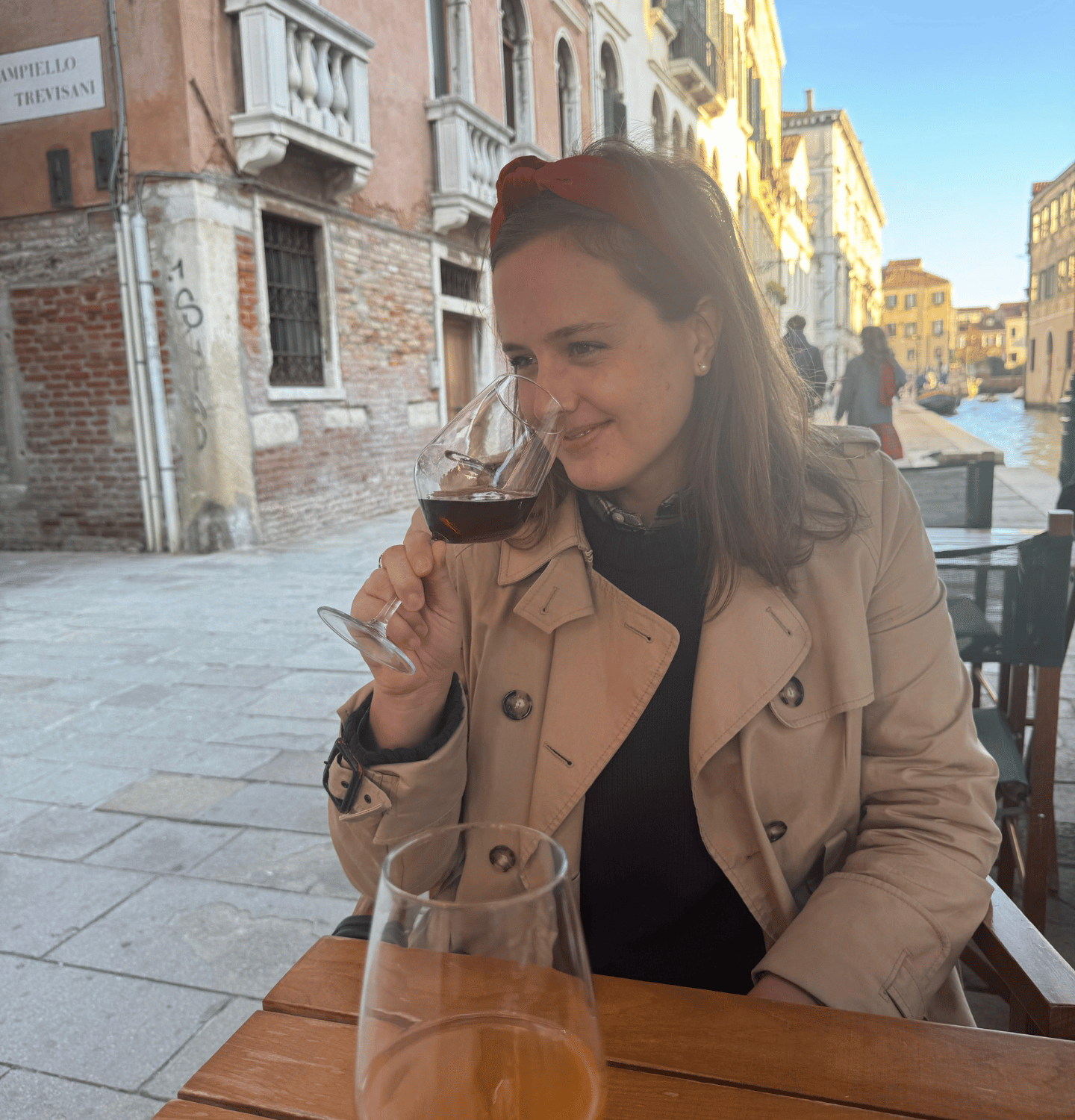
Stop 4: Vino Vero
Vino Vero is one of the few places that both locals and tourists adore. It is one of the nouveau-style bacari that offers a rotating list of Italian by-the-glass options and modern twists on cicchetti.
Other recommendations in the area:
Lunch at Le Antiche Carampane (reserve in advance).
Shopping for friulane shoes at Piedaterre, spices at Drogheria Mascari. Pick up a locally produced bottle of wine at Livy Wine.
Starting in Cannaregio
The Cannaregio tour is more “off the beaten path” than the Rialto tour and can be done in the late morning or after lunch, during golden hour. Also, the two tours connect through Vino Vero, so if you don’t mind walking, you can do a mega tour or mix and match between the two itineraries. The places I selected in Cannaregio tend towards the “nouveau bacaro” vibe, rather than traditional, with specific wine selections and modern takes on cicchetti.
Locations: Osteria al Tappo, H2NO, Vino Vero
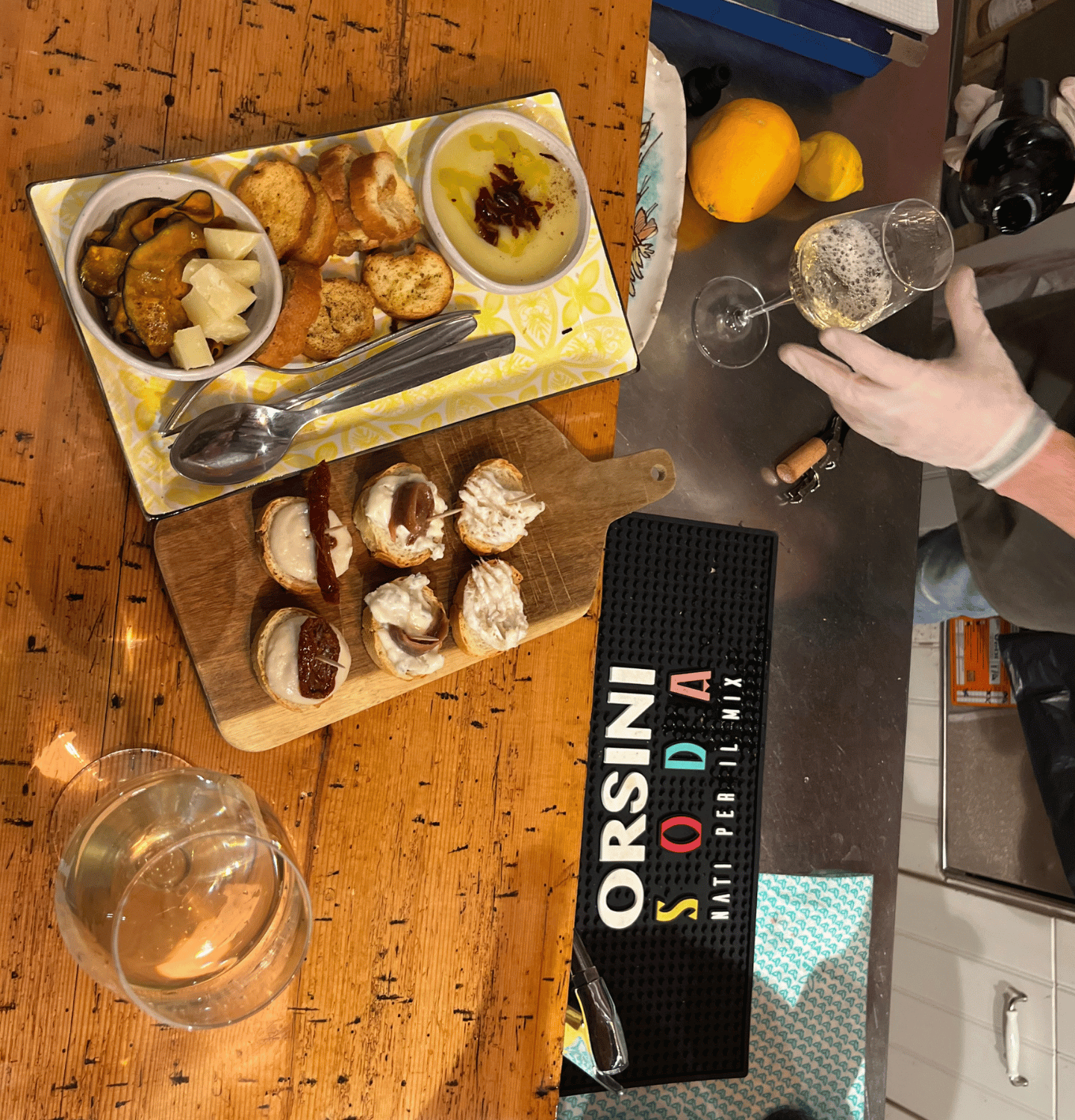
Stop #1: Osteria al Tappo
Opened in 2021, Al Tappo is a new-to-the-scene bacaro, but the owner, Alvise, worked for many years for the historic El Timon just down the street. Al Tappo serves local wines, artisanal beer, and cicchetti that change with the seasons. They have a lovely open-air courtyard with plenty of seating in the back.
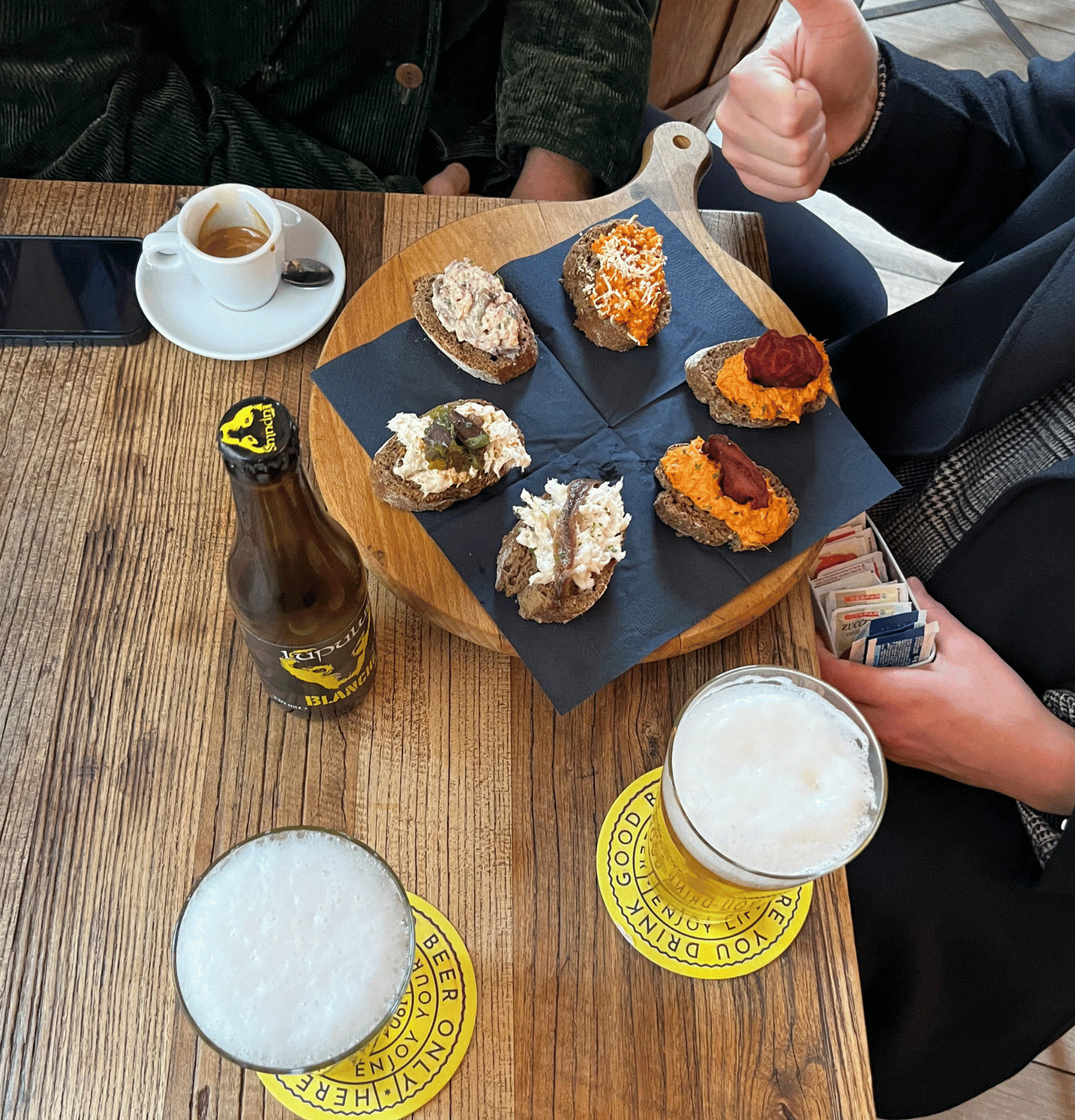
Stop #2: H2NO
H2NO is a contemporary bacaro and birrateca with a large selection of locally produced wine and artisanal beer, if you tire of drinking ombra. They are famous for their vegan cicchetti and tramezzini.
Stop #4: Vino Vero
Lunch: Estro Pane e Vino or Osteria Anicestellato (book in advance)
Other bacari in the area: Al Timon, La Sete, Cantina Aziende Agricole, Cantina Vecia Carbonera, Ca’ d’Oro alla Vedova, El Sbarlefo
Food tourism & the bacaro
Last April, Il Fatto Quotidiano published a short article saying that locals want bacaro tours to stop: “Non vogliamo più i Bacaro tour, non fanno bene a nessuno” (we don’t want bacaro tours anymore, they don’t do anyone any good).
While I can see how groups of drunken tourists rampaging the city’s historic establishments would be a bad thing, bacaro tours are not actually the problem. In fact, the bacaro may be the solution. Exploring a city’s food scene—being a food tourist, if you will—is one of the most sustainable ways to be a tourist. Why? Food tourists spend more on average, and their dollars tend to go to local establishments that provide “authentic” tastes and experiences. In this way, food tourists play an important role in preserving food traditions that may otherwise disappear.
Experiencing a city like Venice through the lens of a food tourist may be the right approach, as the city has reached almost Disneyland heights of tourism. Since Airbnb entered the city in 2010, the historic center began to drain of local inhabitants. During my interview with Davide, he explained the phenomenon: “The soul of Venice is gone…It’s like behind the mask, we have no soul.”
Less than 50,000 Venetian locals remain in the historical center today due to rising housing costs and tourist congestion, a 70 percent decline since the residential peak in 1951. The fundamental change to the fabric of the city is reflected in the bacaro, a space once reserved for the city’s locals, gondoliers, and merchant workers. Now, they are hotspots for in-the-know food tourists looking to experience what is left of the “real” Venice.
If not for bacaro tours, perhaps these historic establishments may cease to exist. This would leave room for more tourist traps, owned by non-Venetians, hawking international interpretations of Italian food (cannoli, pizza, lasagna), to take hold of the city.
The bacaro is more than just a traditional Venetian drinking spot; it is an expression of the city’s identity and the values of socialità that define Venetian life. Tourists who venture into bacari, whether knowingly or not, become participants in a ritual that has been fundamental to Venetians’ everyday life for centuries.
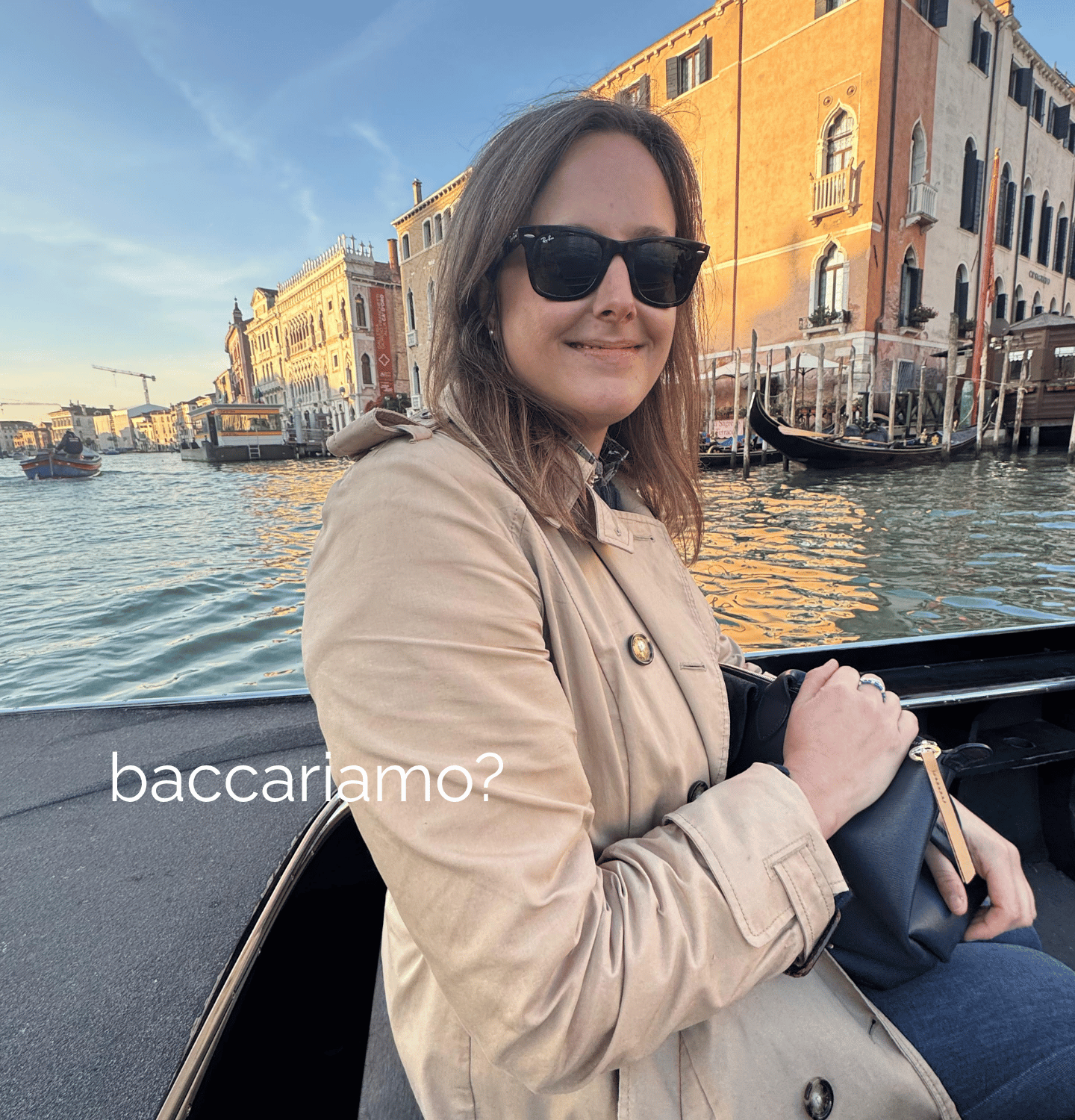
Whether the bacaro is a sustainable solution to over-tourism or a really great excuse to eat fried mozzarella at 10 am, I’ll let you decide. For me, it’s the only way to get a taste of the real Venice.
- Emma from La Nonna Vita
Great post, Emma. I’ll add bacaro in Venice to my bucket list.